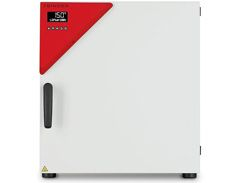
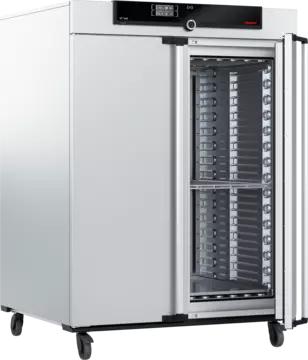
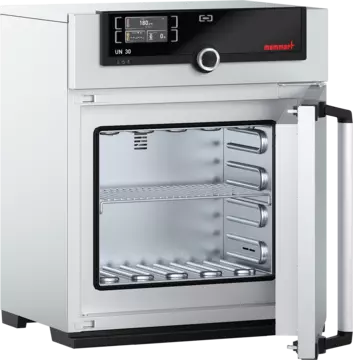
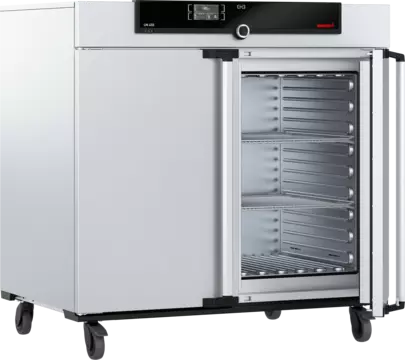
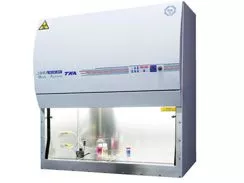
What is a laboratory oven?
medicine, electronics, food processing and research can be found. Laboratory ovens provide uniform temperature and precise temperature control for heating, drying, evaporation, sterilization and other industrial laboratory operations. The temperature of the laboratory oven is from the environment up to more than 300 degrees Celsius.
For drying samples and especially drying laboratory utensils that can provide the user with ambient temperature up to 300 degrees. The oven is available in ordinary and Fendar models. It is used in the laboratory for drying laboratory glassware and sometimes for sterilization.
Types of laboratory ovens
- Heavy Duty Ovens
- Standard Digital Ovens
- Gravity Convection Laboratory Oven
- Mechanical Convection Laboratory Oven
- Forced Convection Ovens
Fan laboratory oven
Laboratory oven Fan ( Fan laboratory oven ) with a single cost-effective and highly efficient and suitable for most cases drying, warming and general laboratory applications are PCB.
Exterior of the general fan laboratory oven is made of steel sheet coated with paint and powder. The inner compartment is made of stainless steel and has fixed shelves and shelves made of removable chrome wire. The top valve has a clamp to hold the mercury thermometer in the glass. Active air circulation is installed as standard in all laboratory ovens.
General purpose laboratory ovens can be provided with controls at the bottom or side of the unit. These light horizontal units have controls mounted next to them and are available from 50 liters and up.
The fan laboratory oven is heated by Incoloy sheath elements located under the bottom of the chamber for natural convection and is placed around the fan at the back or wall of the chamber for mechanical displacement. The control system includes a direct reading thermostat and overheated thermostat with calibrated scales and anti-tamper lock, a power on / off switch with microprocessor PID controller with dual digital display of adjustment point and actual temperature for each person. The above oven is automatically adjusted to optimize overheating, overheating and temperature control.
The temperature range of all laboratory fan ovens is 40 to 250 degrees Celsius, with fluctuations of + 0.75 degrees Celsius.
Vacuum laboratory oven
Vacuum laboratory oven can be used to dry the process in vacuum or atmospheric standard conditions. They are designed to work with reduced pressures and / or inert atmospheres. This versatile device is equipped with a highly reliable hydraulic thermostat to control the temperature up to ± 1.5 ° C with a uniformity of ± 5 ° C (at 100 ° C; 25 inches) and an internal temperature protection system. Vacuum needle valves and independent purification. These devices have 3-inch fiberglass insulation, silicone door washers and polycarbonate safety guards. The vacuum level gauge shows vac 0 to 30 “Hg.
Standard features of vacuum oven
- Temperature up to 220 degrees Celsius (428 degrees Fahrenheit)
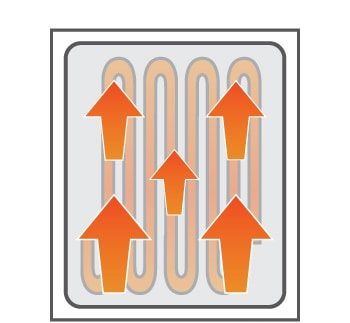
- Radiant wall heating provides a uniform temperature and full use of the workspace
- Control valves and vacuum V vacuum ac
- Safety glass window with full view
- Internal stainless steel 304
- Heavy steel gauge outer cover
- Two (2) movable and solid aluminum shelves
- Safe nut and silicone rubber door washer provide a tight seal
- Vacuum fittings diameter 0.25 inches (6 mm)
- 3-inch fiberglass insulation ensures minimal heat loss
- Wire 3 wires
- 2 years limited warranty
Laboratory oven components
Main compartment
The main compartment is the part where we want to sterilize the equipment. Which fall inside. The body is usually made of stainless steel or heat and moisture resistant alloys. Special and important components such as thermocouples and temperature sensors are also placed inside this chamber.
Insulation
Due to the fact that the temperature produced in the oven must be very high. It is essential to avoid wasting energy as much as possible. Apart from this, a lot of heat generated in the room melts when it penetrates outside and into the circuit of the device. Therefore, the use of insulation is very important. Fiberglass is widely used for this purpose. In addition, a durable fiberglass tape helps prevent heat loss.
element
Near the outer wall, there are elements that bring the temperature to the required level. Most specimens contain one or two metal elements covered with ceramic. The reason for using insulation is having an element.
Protection section
Such a device must be equipped with systems to protect electrical and internal circuits. In this case, the power fuse will be responsible for the power outage. In addition, the device has a convenient temperature control system.
Temperature display
This system measures and reflects temperature in various ways such as thermometer, electrical panel connected to temperature sensor, metal or steam thermocouple.
Application of laboratory oven
- Drying or dehydration – removing moisture from the samples. It is commonly performed in environmental, biological and clinical laboratories.
- Sterilization – Remove or kill bacteria or microorganisms. Commonly used for sterilizing laboratory equipment .
- Annealing – Used to relieve internal stresses and harden metal or glass. The metal or glass is heated and allowed to cool slowly.
- Evaporation – Solution is used to evaporate excess solvents such as water to produce a concentrated solution or to measure their melting point.
When choosing a laboratory oven, consider the plans, dimensions, capacity and budget of the laboratory.
The difference between a laboratory oven and an incubator
In the laboratory, it is often necessary to heat equipment or keep small animals and creatures warm. This can be done with an incubator or oven. To understand the difference between an incubator and an oven, it helps you to learn the uses of each item. Both devices heat up, but this is about their similarities.
Principles of incubator
An incubator is an enclosed device that provides a controlled environment for various tasks. These tasks include keeping the animals at the temperature necessary for birth or growth. For example, growing baby chicks or heating eggs for hatching.
The incubator also provides a controlled environment for the growth of microorganisms. This is useful for scientific work such as the growth of microbial culture. The use of BOD incubators in microbiology is included in this group. BOD (Biologically Required Oxygen) incubators operate at low temperatures to incubate materials such as yeast and mold. This is generally done between 68 degrees Fahrenheit and 77 degrees Fahrenheit.
Incubator in front of the oven
When examining the differences between an oven and an incubator, it helps to check the temperature ranges. Incubators are typically heated in the range of 77 degrees Fahrenheit to 104 degrees Fahrenheit. The temperature used depends on the task. For example, according to the Backyard Chicken Coops , eggs must be emptied between 98.6 degrees Fahrenheit and 102.2 degrees Fahrenheit. If you lay eggs at a temperature below the permissible temperature, the embryos may die. Eggs hatched at temperatures above the recommended temperature hatch very quickly and may deform.
Basics of laboratory ovens
In addition to cooking in the kitchen, an oven is widely used in laboratories. Laboratory ovens are used in many fields. These include biology, chemistry, physics, electronics, forensics and medicine. Furnaces generally range in temperature from 150 degrees Fahrenheit to more than 1,472 degrees Fahrenheit. Another difference between incubators and ovens is the high temperature that the furnaces reach.
There are several types of laboratory ovens. These include hot air ovens used to sterilize laboratory instruments such as glassware and scalp. Annealing ovens are used to heat and cool equipment to strengthen them. Drying ovens are used to ensure that all moisture is removed from the equipment. Baking ovens harden the chemical composition of materials by bonding them.
Training video for working with laboratory ovens
The best supplier of laboratory ovens
Daneshvar Shimi Company is an importer of laboratory equipment , laboratory and research equipment and chemicals. Daneshvar Shimi Company also has the ability to supply spare parts for laboratory equipment and laboratory devices purchased by centers that have problems.
Source: https://www.hunker.com/13408364/differences-between-an-incubator-and-an-oven