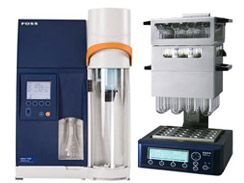
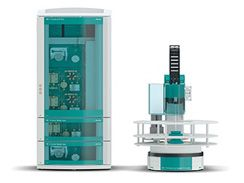
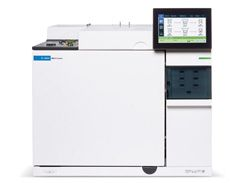
TOC device
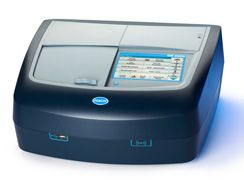
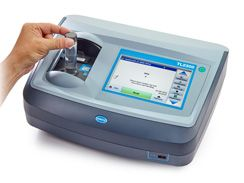
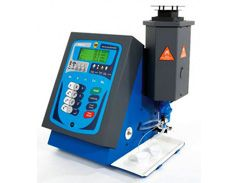
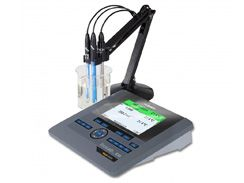
TOC device or TOC d analyzer is a laboratory equipment that uses the 680 ° C catalytic oxidation method, which has been developed and is now used worldwide. While offering an extremely wide range from 4 micrograms per liter to 30,000 milligrams per liter, these analyzes, in coordination with NDIR, have a detection range of 4 micrograms per liter.
This is the highest level of detection sensitivity available by the catalytic oxidation method of combustion. In addition, the catalytic oxidation method of combustion makes it difficult for not only low molecular weight organic compounds to decompose easily, but also insoluble and macromolecular organic compounds to be difficult to decompose.
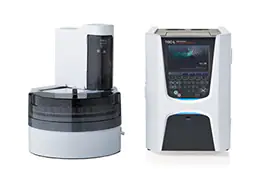
TOC device measurement range
Very wide measurement range from 4 micrograms per liter to 30,000 mg per liter, usable for everything from ultra-pure water to highly contaminated water (TOC-L CSH / CPH )
- Capable of measuring TC, IC, TOC (= TC-IC) and NPOC. Measurement options for POC (volatile organic carbon), TOC via POC + NPOC and even TN (total nitrogen)
- Empty check function evaluates system voids by measuring ultra-pure water that is automatically processed in the machine
- The automatic diluent function makes it possible to measure up to 30,000 mg / l
Reliable sample injection system of TOC device
- Prototyping and automatic spring sampling
- The automatic dilution function reduces the salinity, acidity and alkalinity of the sample and significantly increases the period of use of catalysts and combustion tubes (duration of use depends on the sample and measurement conditions).
- Statistical or priority samples can be added to the analysis program at any time without interrupting operations, even when an automated sampler is used.
4 models fit the TOC device
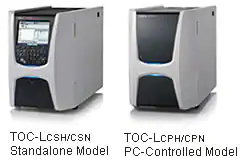
The TOC-L series includes a high-sensitivity model with a detection limit of 4 micrograms per liter, which makes it suitable for a variety of applications, including pure water measurements and a standard model with cost performance. Each analyzer is available as a standalone model with LCD and keyboard or as a PC-controlled model.
In addition, the USB format is used as an external interface and increases the variety of equipment. Even standalone models can output to a public PC printer or a USB memory card.
Options to further increase the performance of the TOC device
With the TOC-L Series, multiple options for a variety of performance enhancements are possible. These include the simultaneous measurement of TOC and TN (total nitrogen) (when a unit of TN is added), the use of compressor air (when a carrier gas purification kit is added), and the measurement of gas samples and solid samples ( When the gas is injected, a sample injection kit and a solid sample combustion unit are added. Seawater sample measurements and small sample volume options have also been increased.
Space saving and energy saving design
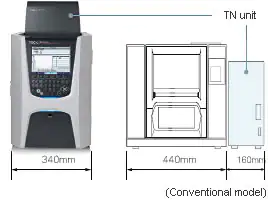
This model is 20% less than regular models. This allows for more efficient use of laboratory space. Even if the TN unit is added, the tool width is unchanged.
This product is in accordance with the product with ECO label. Energy saving: Power consumption is reduced by 36% (100 volts) and 43% (200 volts) compared to a conventional product. (Assuming 8 hours of work per day 5 days a week)
Features of TOC device
680 ° C Catalytic oxidation method of combustion
The developed 680 ° C catalytic oxidation method is now used worldwide. One of its most important features is the effective oxidation capacity of hard-to-decompose organic compounds, including insoluble and macromolecular organic compounds.
TOC measurement (total organic carbon)
Catalytic oxidation method of combustion at 680 ° C with complete combustion up to 680 ° C in an oxygen-rich environment inside TC combustion tubes filled with platinum catalyst, complete combustion.
Because of this simple principle of oxidation by heat and combustion, pre-treatment and post-treatment with oxidizing agents are unnecessary, which increases performance. Carbon dioxide produced by oxidation is detected using infrared gas analysis (NDIR).
The TOC-L series achieves a high detection sensitivity of 4μg / L, the highest level for the combustion catalytic oxidation method, by adopting a newly designed high-sensitivity NDIR. The following figure is a general diagram showing the measurement of TOC using the 680 ° C catalytic oxidation method and the NDIR method.

The sample is delivered to the combustion furnace, which is supplied with purified air. There, it is ignited by heating up to 680 ° C with a platinum catalyst. Decomposes into carbon dioxide. The carbon dioxide produced is cooled and dehumidified and then detected by NDIR.
The concentration of TC (total carbon) in the sample is obtained by comparison with the calibration curve formula. 1) In addition, by placing the oxidized sample in the spraying process, the IC (mineral carbon) in the sample is converted to carbon dioxide and the concentration of the IC is determined by detecting this with NDIR. 2) The TOC concentration is then calculated by subtracting the IC concentration from the TC concentration obtained. 3)
Measurement of NPOC (non-refined organic carbon)
In ambient water and other samples that are part of a very large IC TC, significant errors may occur if the above method is used to measure TOC. Accordingly, the organic carbon of the sample is usually measured by the NPOC measurement shown in the figure below. This method is the same as the TOC measurement methods using acidification and sparring (IC removal) described in the official measurement methods (such as JIS and ASTM).
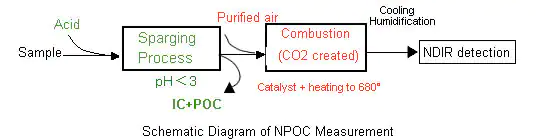
By spraying samples to which a small amount of acid has been added, the IC in the sample is converted to carbon dioxide. This carbon dioxide is removed and the TOC is obtained by measuring the TC in the treated sample. When carbon dioxide is removed from the IC, POC (Organic Refined Carbon) may also be lost.
Accordingly, the TOC obtained by this method may be called NPOC. Provides options for measuring this POC, which is usually missed, and enables a more complete TOC measurement.
Software features Intuitive performance and wealth of functions
LabSolutions ™ TOC PC software that enables simple and intuitive operation